

Instead of scrubbing baked-on food from the drawer after every meal, fit a Crispform silicone basket inside your Tefal air fryer to contain residue—but only after checking the fit, permitted accessories and heat limits. This 2026 guide shows you how to assess an air fryer liner for Tefal, position it correctly and check the cooking result without assuming universal compatibility.
- Choose an air fryer liner for Tefal by usable basket dimensions, not the appliance's stated capacity.
- Crispform silicone air fryer liners suit home cooks prioritizing easier cleanup, provided model-specific fit and permitted use are confirmed.
- Keep the liner clear of heating elements, moving parts and the drawer's closing mechanism.
- A silicone liner contains residue but does not replace cleaning the appliance or checking food doneness.
Why this matters
A liner that fits inside the drawer is not automatically suitable for cooking inside it. The basket must still sit correctly, the drawer must close normally and the accessory must comply with your appliance instructions. Fit includes clearance above the food, not just space around the base.
A solid silicone basket also changes the surface beneath your food. It collects drips, but it does not reproduce the exposed openings of a perforated cooking plate. That trade-off matters when you want both easier cleanup and a browned underside.
For your 2026 accessory check, start with the appliance manual rather than a generic compatibility label. The guide to silicone air fryer liners for easy cleanup provides context for choosing this type of accessory; the checks below determine whether it belongs in your particular drawer.
Before you start
- Identify the appliance. Find your Tefal model reference and its instructions. Check whether removable cooking liners are permitted, which cooking modes allow them and whether the original cooking plate must remain installed.
- Gather the liner instructions and measuring materials. You need the liner's dimensions, permitted temperature and care guidance, plus a ruler or tape measure. Measure the usable interior with the appliance cold and unplugged.
- Check the hidden obstruction before cooking. Handles, folded walls, a raised centre or a moving component can prevent proper placement even when the base dimensions look suitable. Never remove a required appliance part to make a liner fit.
Keep a note of these checks with your 2026 kitchen instructions. Do not proceed when the permitted temperature or accessory placement is unclear. Resolve those points through the relevant instructions before heating the liner.
Basket measurements and liner selection
Measure the usable cooking space
- Unplug the air fryer and let every removable part cool. Remove the drawer or basket as directed in the appliance manual.
- Leave the required cooking plate in its normal position. Measure the usable width and depth at the level where the liner will sit, not across the wider opening at the top.
- Check the corners and any central obstruction. A rectangular opening does not guarantee that a rectangular liner will sit flat at the bottom.
- Measure the available height with the liner's rim and handles in mind. Allow for the food as well as the accessory; nothing should contact the heating element or obstruct closure.
- Compare those measurements with the liner's stated dimensions. Check whether those dimensions include handles and whether the liner is measured open or folded.
Expected result: you can explain where the liner will sit and confirm that it fits without squeezing, buckling or changing the appliance's required assembly.
Do not select an accessory from litres alone. Capacity describes volume, not the exact shape of the cooking surface. Likewise, a liner sold for an air fryer is not proof of compatibility with every appliance carrying that description.
Choose the format that matches your routine
Crispform offers reusable silicone baskets in different pack formats. Choose between them only after the fit check; extra accessories do not compensate for the wrong footprint.
| Option | Best for | Practical advantage | Limitation to check |
|---|---|---|---|
| Silikonkorgar till airfryer — 2-pack + pensel | Home cooks wanting baskets with a basting brush | Includes 2 reusable silicone baskets and 1 brush; the baskets are described as non-stick and dishwasher-safe | The pack description does not establish a fit for your particular Tefal model |
| Hopfällbara korgar 3-pack | Home cooks specifically wanting a folding basket format | Includes 3 folding silicone baskets | Check the dimensions and intended cooking position; foldability is not permission to compress a basket into a smaller drawer |
Crispform silicone air fryer liners suit home cooks who prioritize containing food residue and can confirm model-specific fit. The benefit is keeping residue inside a removable accessory; the compromise is that a solid base changes how food meets the cooking surface.
Select a pack for its confirmed fit and useful contents, not simply the larger basket count. Neither pack should be treated as a model-specific Tefal accessory without checking its instructions against the appliance.


Liner placement and the first cook
Confirm the cold fit
- Clean the liner before first use according to its care instructions. Inspect it for tears, damaged edges or deterioration before placing food inside.
- Put the liner in its intended cooking position. Fully open a folding basket unless its instructions expressly permit another configuration.
- Seat the base evenly on the permitted cooking surface. Do not wedge the walls against the drawer, tuck handles under required parts or bridge an obstruction.
- Close the cold drawer gently. Stop if the rim catches, the basket shifts or the drawer needs pressure to close.
- Reopen the drawer and inspect the position. Confirm that closing it has not folded the liner or pushed a handle into an unsuitable space.
Expected result: the drawer closes normally and the liner stays seated without distortion. A snug appearance is not a reason to accept forced closure.
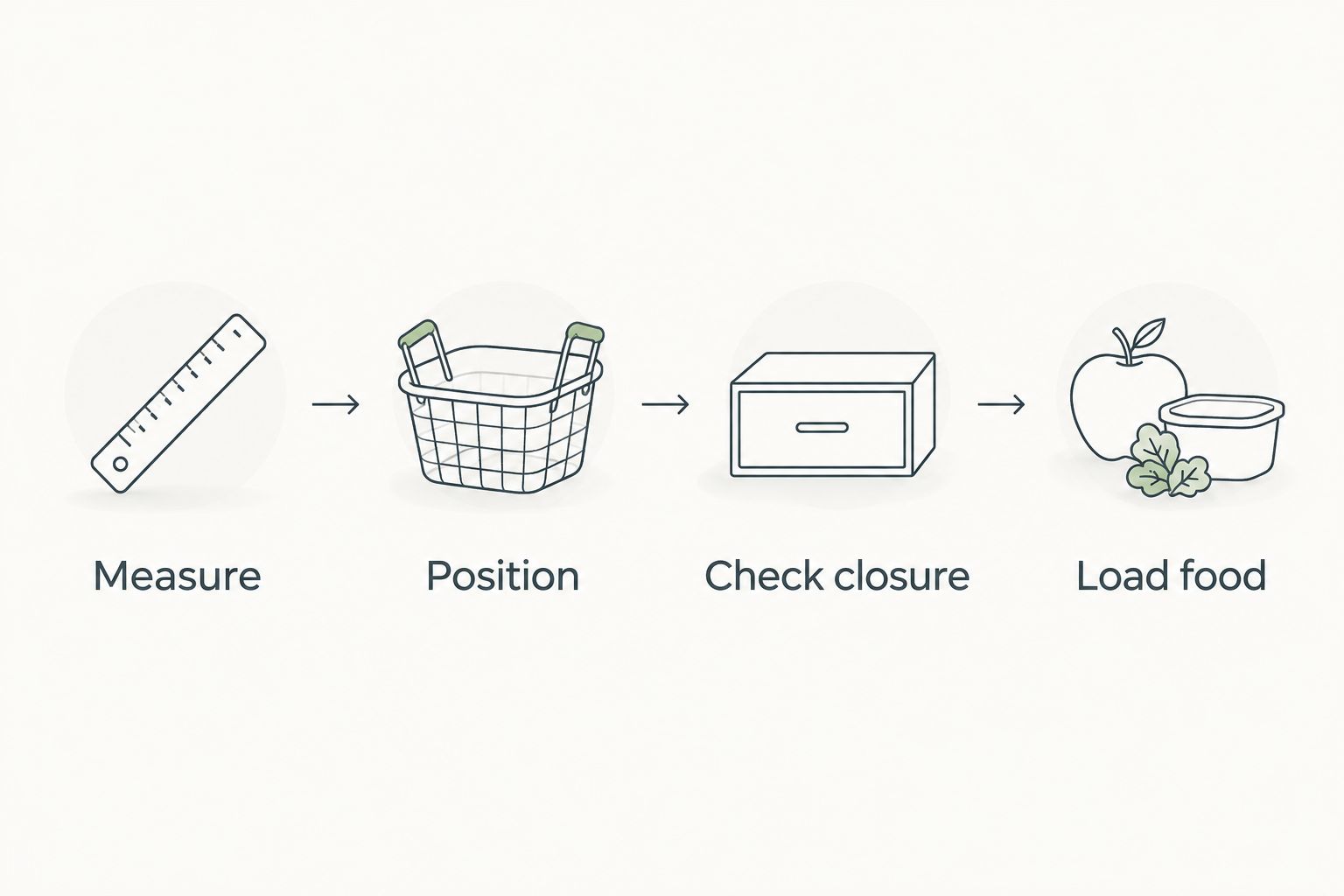
The useful sequence is simple: measure first, place the liner cold, check closure, then load food. Finding a clearance problem before heating is easier and safer than correcting it around a hot basket.
Load food and check the result
- Follow your appliance's preheating instructions. Do not add an empty liner during preheating unless both the appliance and liner instructions permit it.
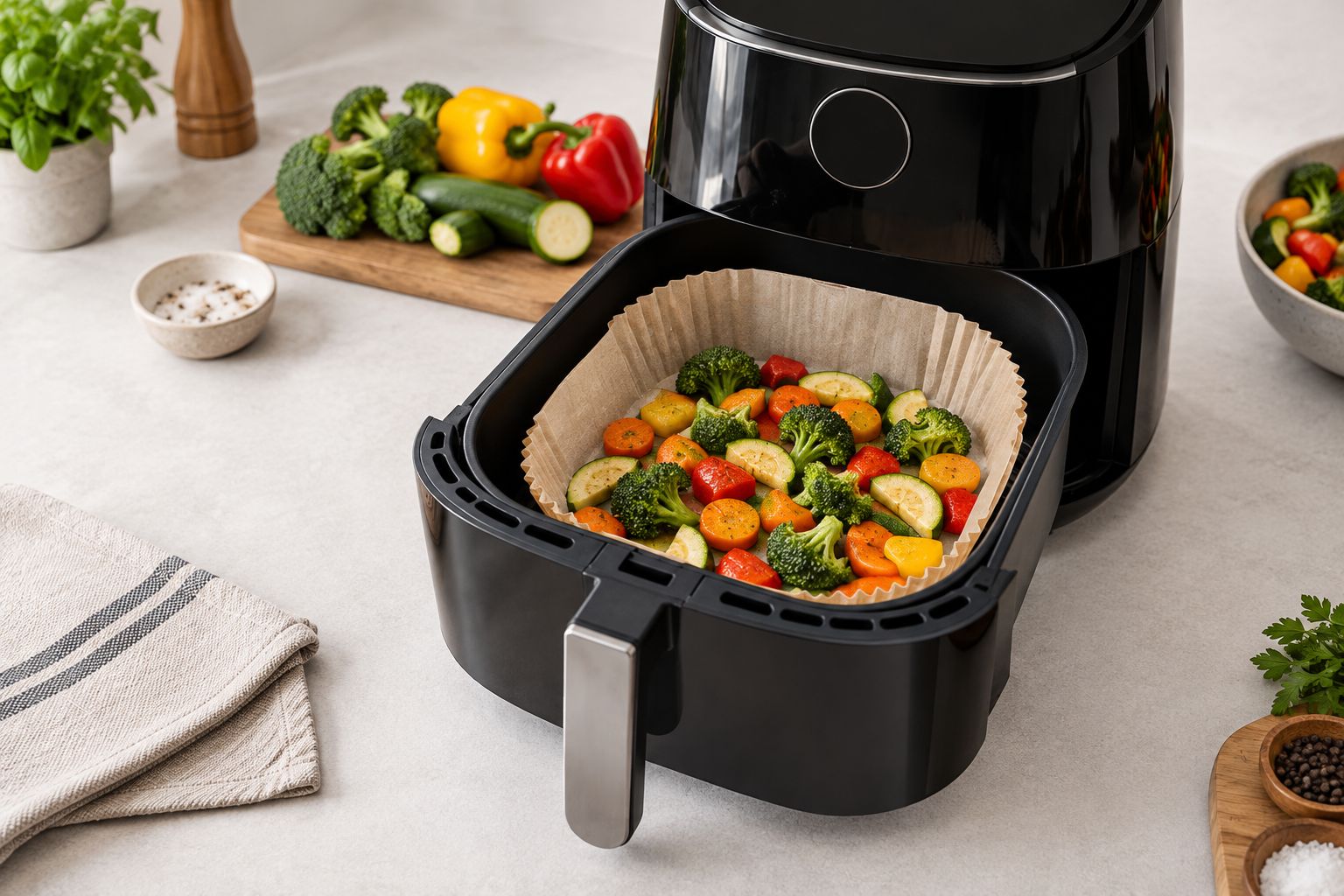
- Add food without packing it against the liner's rim. Keep the load within the appliance's instructions and leave space for the food to be turned when necessary.
- Select only a cooking mode and temperature permitted by both sets of instructions. The lower applicable temperature limit controls; a familiar recipe setting does not override the accessory's limit.
- Check food during cooking as directed by the recipe and appliance manual. Turn or rearrange it with suitable utensils when needed, avoiding tools that can cut the silicone.
- Assess doneness independently of the liner. For foods requiring a safe internal temperature, use a suitable food thermometer and authoritative guidance for that food.
Expected result: the liner remains properly positioned and the food reaches its required doneness. If the underside is wetter or less browned than you want, adjust the loading pattern rather than assuming the original cooking time remains suitable.
Keep the first lined batch straightforward. Use a familiar food so you can identify changes in browning, moisture collection and turning access without changing the recipe at the same time.
Cleanup and the next batch
- Switch off the appliance and handle the hot drawer according to its instructions. Use appropriate heat protection; silicone and collected cooking liquid can be hot.
- Let the liner cool sufficiently before lifting or emptying it. Support it from underneath if necessary rather than relying on a flexible rim to carry liquid.
- Remove food residue and clean the liner according to its own care instructions. Dishwasher suitability must be confirmed for the particular item, not assumed for every silicone accessory.
- Inspect the original basket, cooking plate and drawer. Clean any grease or residue that escaped around the liner before reassembly.
- Dry the parts and return them to their required positions. Inspect the liner again before the next use, especially around folds and handles.
Expected result: both the liner and appliance are clean, dry and correctly assembled. The removable basket reduces the area exposed to food residue; it does not make the surrounding drawer maintenance-free.
Avoid lifting a flexible liner full of hot juices straight onto a serving plate. Transfer the food with suitable utensils first, then deal with the cooled residue separately.
Variant: switching from dry food to a saucy dish
A second workflow applies when the meal leaves liquid inside the liner. Check that the liner is intended for that use before treating it as a cooking vessel. A reusable basket is not automatically suitable for every recipe or quantity of liquid.
- Confirm the recipe, cooking mode and liner instructions are compatible. Do not add liquid solely to prevent sticking unless the recipe and appliance guidance support it.
- Keep the contents below the rim and allow room for movement when opening the drawer. Do not use the appliance's overall capacity as the liner's fill limit.
- Check the food's doneness rather than judging it by bubbling sauce alone. Stir only when the recipe and appliance instructions call for it.
- Transfer the food before lifting the liner. Let collected liquid cool before removing the accessory for cleaning.
Expected result: the dish remains contained without overflow, and you remove it without carrying a flexible basket full of hot liquid. The cleanup benefit remains, but liquid handling becomes the priority.
Troubleshooting
The drawer catches or will not close normally
Remove the cold liner and check its rim, handles and base against the available space. Do not force the drawer or trim the liner. If correct placement still obstructs closure, choose a different size or cook without that accessory.
The bottom of the food stays wet
Check for collected moisture and crowded food. Spread the next batch more evenly and turn food where appropriate; if the result still misses your goal, use the original cooking surface as permitted by the appliance manual.
A folding wall collapses during loading
Check that the basket is fully opened in its intended position before adding food. If it cannot remain correctly shaped during normal use, stop using that configuration rather than propping it up with another utensil or accessory.
Residue appears underneath the liner
Inspect for spills, food over the rim and damage to the silicone. Clean the appliance as well as the liner; residue underneath is a reason to inspect the setup, not to cover the entire drawer with additional layers.
Customize your workflow
Build your 2026 routine around the result you actually want. A liner is useful when containing sticky residue matters most; the original cooking surface remains an option when the recipe depends on direct exposure to its openings.
Record the food, loading pattern and permitted settings after a successful cook. That gives you a repeatable starting point without treating one result as a rule for every meal.
Keep appliance-specific notes separate. A liner that sits properly in one drawer still needs a fresh fit check before use in another appliance, even when both are described with similar capacities.
FAQ
What is the best air fryer liner for Tefal in 2026?
The best air fryer liner for Tefal is one whose dimensions, temperature limit and intended use match your specific appliance. Choose by usable cooking space and the appliance instructions, not capacity alone.
Will Crispform liners fit every Tefal air fryer?
Do not assume Crispform liners fit every Tefal air fryer. Check the liner dimensions against the usable cooking space and confirm that its placement is permitted for your model.
Should I remove the cooking plate before fitting a silicone liner?
Remove the cooking plate only if your appliance instructions permit that arrangement. Do not change the required assembly merely to create space for a liner.
Can I preheat my Tefal air fryer with an empty silicone liner?
Use an empty silicone liner during preheating only when both the appliance and liner instructions permit it. Otherwise, follow the appliance's preheating procedure without adding the liner.
Why is my food less crisp with a silicone liner?
A solid silicone liner changes the surface beneath food and collects drips, which can leave the underside wetter. Avoid crowding, turn food where appropriate and compare the result with the permitted original cooking surface.
Can I wash these silicone baskets in the dishwasher?
The baskets in Silikonkorgar till airfryer — 2-pack + pensel are described as dishwasher-safe. Check the care instructions separately for any other basket rather than assuming the same cleaning method applies.
Does a liner mean I can stop cleaning the air fryer basket?
No, a liner does not replace cleaning the air fryer basket and drawer. Inspect the appliance after cooking and remove any grease or residue that escaped around the accessory.
One last thing
Make a cold drawer-closure check part of your 2026 setup whenever you change liners. The decisive test is not whether the liner can be pushed inside—it is whether the appliance remains correctly assembled with the liner in place.