

Instead of scrubbing food residue from your air fryer basket after every meal, fit a Crispform silicone liner only after checking your Cosori manual, basket dimensions and clearance. This 2026 guide shows you how to choose an air fryer liner for Cosori, check its fit without heat and build a repeatable cooking-and-cleaning routine.
- Choose an air fryer liner for Cosori by basket measurements and appliance instructions, not the brand name alone.
- Crispform reusable silicone baskets suit cleanup-focused cooks when the liner fits and the appliance instructions permit its use.
- Check the liner in a cold basket before cooking; reject folded sides, trapped handles or a drawer that resists closing.
- Silicone liners collect cooking residue, but they do not replace airflow checks or cleaning the appliance itself.
Why this matters
Crispform silicone air fryer liners are best for home cooks who prioritize easier cleanup, provided the liner fits their appliance. Compatibility comes before convenience: a liner that distorts inside the basket is not a suitable fit just because the drawer closes.
A silicone basket also changes the surface beneath your food. Its solid base collects residue, but it does not behave like an exposed perforated cooking surface. That trade-off matters when you want browning underneath as well as less washing afterward.
For a broader look at that choice, see the guide to silicone air fryer liners for easy cleanup. Here, the priority is a practical fit check rather than a universal compatibility claim.
Before you start
- Find your exact appliance instructions. Have the Cosori model identification and manual available. Check what the manufacturer says about inserts, accessories, preheating and maintaining airflow before using a liner.
- Gather the fitting materials. You need a cool, clean basket, its normal cooking insert, a ruler or tape measure, and the liner's stated dimensions and use instructions. Compare measurements in the same units.
- Check the hidden fit problem: usable space. The drawer's outside dimensions are not its cooking dimensions. Sloping walls, rounded corners and handles can reduce usable space, so a matching top width alone does not establish a fit.
Do not remove a required cooking insert to make a liner fit. Keep the basket assembled as directed by the appliance manufacturer. If accessory instructions conflict with the appliance manual, do not proceed with that setup.
For a 2026 purchase, make the decision from the current product information and the instructions for your exact appliance, not a photograph of a similar-looking basket.
Choose the liner format
The two formats below serve different practical needs. Neither should be treated as compatible with every Cosori model; choose only after checking dimensions, permitted use and the cold-fit steps that follow.
| Format | Best for | Supported benefit | Limitation to check |
|---|---|---|---|
| Silicone baskets with a basting brush | Cooks who want reusable baskets and a brush | Includes 2 baskets and 1 basting brush; baskets are described as non-stick and dishwasher-safe | Basket dimensions and appliance compatibility still need checking |
| Foldable silicone basket set | Cooks who prefer a foldable format | Includes 3 foldable baskets | Check the fully opened shape and its care instructions before use |
The first set's dishwasher-safe description does not automatically apply to the second set. Likewise, having several baskets does not mean you should stack them or use them together in one cooking compartment.
Choose by usable fit first, format second. An extra basket or included brush cannot compensate for pinched walls or insufficient clearance.
Basket measurements
- Switch off the appliance and let it cool. Remove the basket only when it is safe to handle. Clean away residue that would prevent the liner from resting normally.
- Reassemble the cooking area as instructed. Leave the required cooking plate or insert in its normal position. Measure the space where the liner will actually sit.
- Measure the usable base. Record its width and depth, or diameter if appropriate, and note rounded corners. Measure the available height separately rather than assuming the basket's full depth is usable.
- Compare the liner's complete dimensions. Include its upper rim and handles, not just its base. For a foldable liner, use the fully opened dimensions rather than the storage dimensions.
Expected result: you have a liner whose stated shape and measurements fit the usable cooking space without relying on squeezing, folding or removing required parts.
Keep your measurements together in millimetres or centimetres. Mixing units makes comparisons harder, and a measurement across the widest part of a tapered basket does not describe its narrower base.
Do not interpret softness as permission to oversize. Silicone can bend, but a bent wall can change the liner's shape and crowd the space around the food.
Cold-fit check
- Open the liner fully. Set a foldable basket into its intended cooking shape. Check its care instructions and inspect it for damage before use.
- Lower the liner into the cool basket. Let it settle without pushing the sides inward. The base should sit normally rather than buckle over an obstruction.
- Check the rim and handles. Keep them within the usable basket area and clear of moving parts. Do not tuck a handle into an improvised position just to close the drawer.
- Close the drawer gently. Stop if it catches, needs extra force or changes how the basket seats. Remove the liner and reassess rather than pushing harder.
- Remove the liner again. Confirm that it has not been pinched or distorted during closure. A drawer that closes is only one part of the fit check.
Expected result: the liner sits in its intended shape, the drawer operates normally, and nothing is trapped or forced out of position.
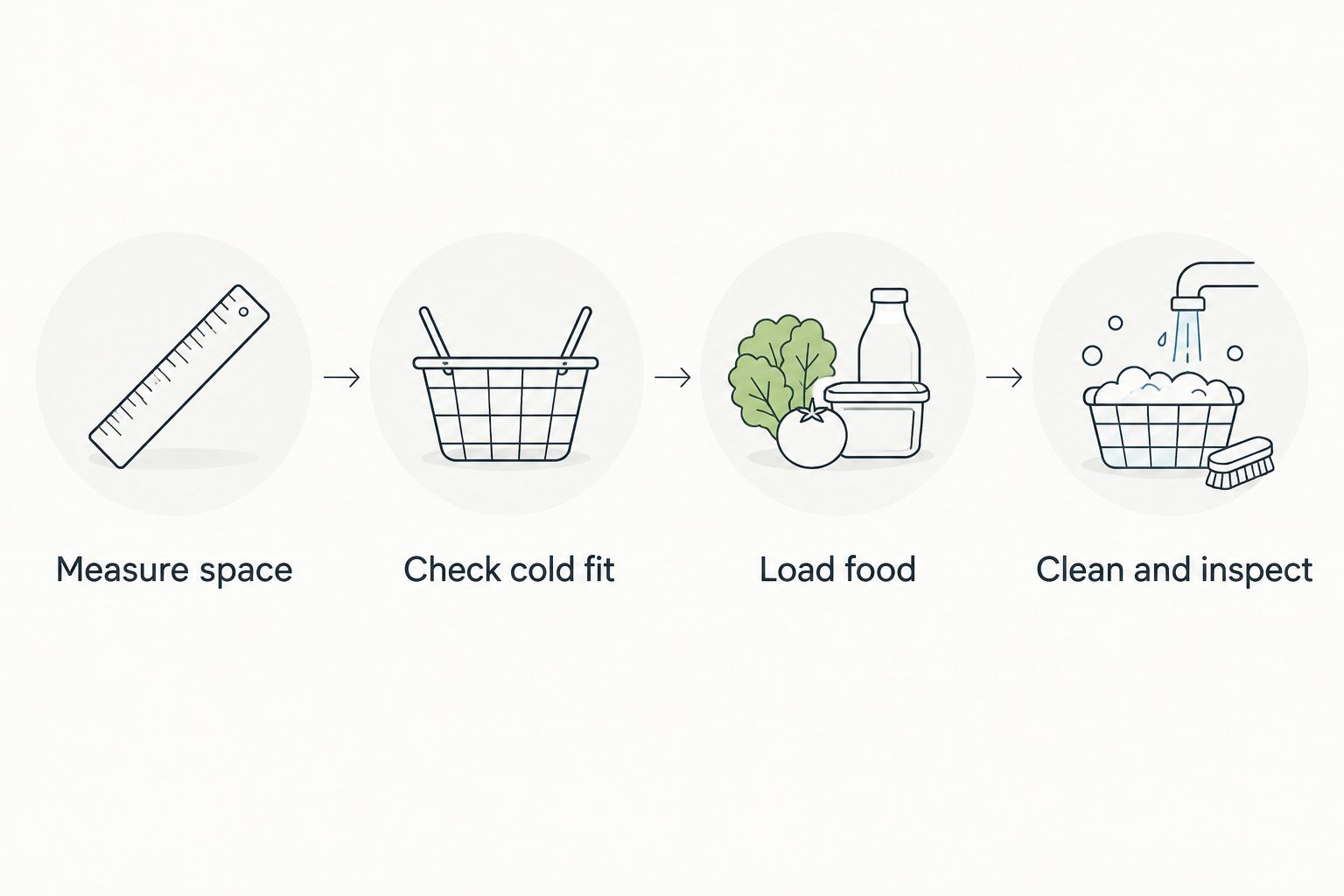
The sequence is Measure space, Check cold fit, Load food, then Clean and inspect. Keep that order; cooking is not a substitute for checking the fit first.
Food loading and cooking
- Wash and prepare the liner according to its instructions. Dry it before fitting it into the basket. Confirm that its permitted cooking conditions match the recipe and appliance settings you intend to use.
- Follow the appliance's preheating instructions. Do not assume an empty liner belongs in the basket during preheating. Add the liner and food only in a way permitted by the appliance and accessory instructions.
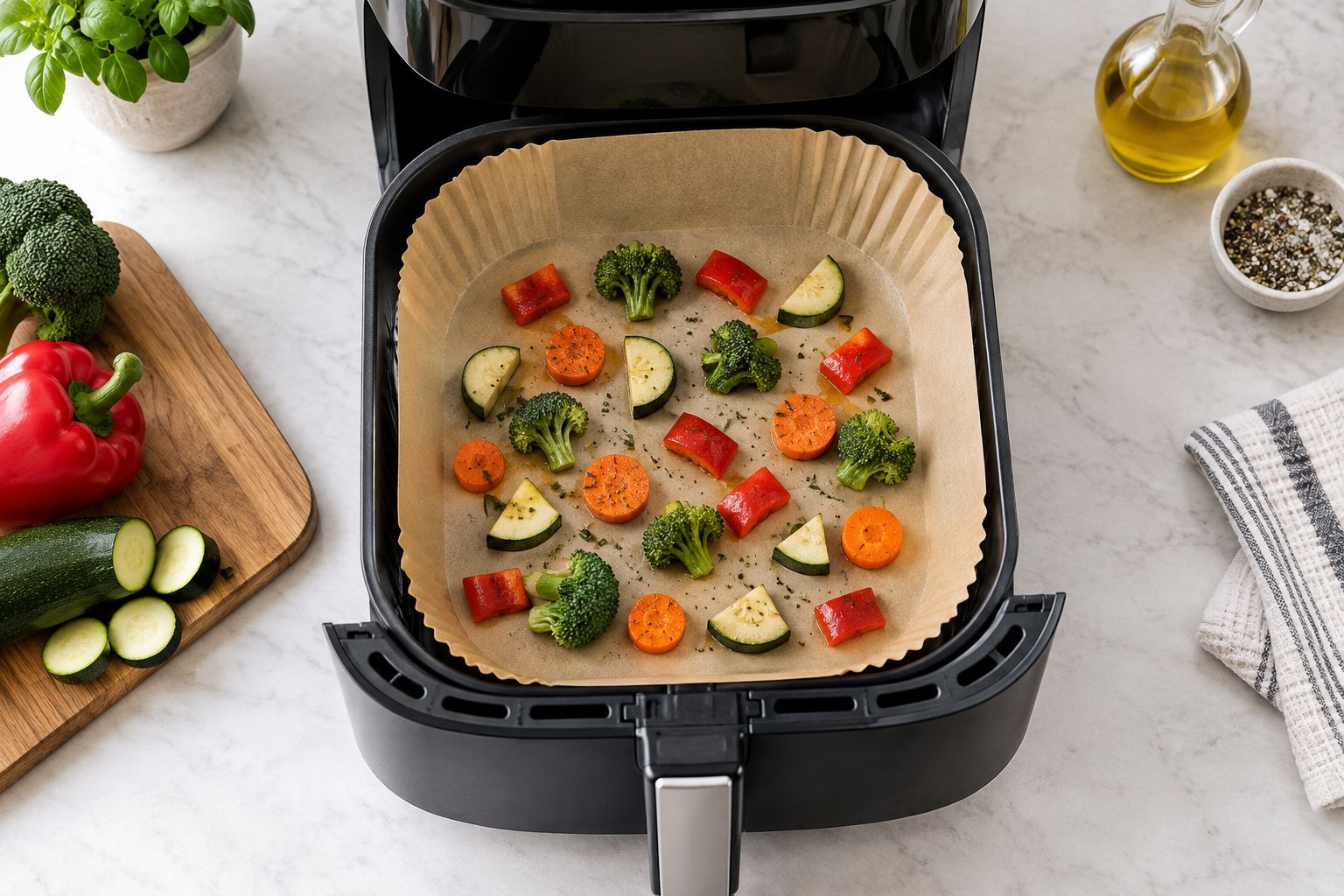
- Load food without crowding the liner. Leave room to turn pieces where the recipe calls for it. Avoid building a deep pile simply because the liner has tall sides.
- Use the recipe as a starting point. Check food during cooking as permitted by the appliance instructions. Turn or rearrange it when appropriate, and use a food thermometer where the food requires a safe internal-temperature check.
- Assess the underside as well as the top. A browned top does not establish that the underside has the texture you want or that the food is safely cooked.
Expected result: food cooks in a liner that remains properly positioned, with doneness checked independently of surface colour.
For your first lined cook in 2026, choose a familiar recipe. That makes it easier to identify a change in texture without also changing ingredients, portion size and preparation method.
A correctly fitted liner still cannot guarantee crispness. Food moisture, loading and the recipe all matter; avoid changing the cooking time automatically before checking the actual result.
Cooling and cleaning
- Remove food using suitable utensils. Treat the liner, basket and collected liquid as hot. Silicone handles are not evidence that a liner is safe to lift with bare hands.
- Let everything cool before washing. Follow both sets of care instructions. Avoid carrying a flexible liner full of hot cooking liquid across the kitchen.
- Empty residue carefully and wash the liner. The Crispform 2-basket set is described as dishwasher-safe; follow its care instructions for placement and cleaning. Check the foldable set's instructions separately.
- Inspect the appliance basket underneath. Remove any residue that escaped the liner, then dry the parts as directed. Inspect the liner's folds and corners before storing it.
Expected result: both the liner and the appliance basket are clean, dry and ready for their next permitted use.
The liner's benefit is collecting food residue in a removable insert. It is not a reason to skip the basket beneath it or leave cooking residue in place between meals.
Once fit and care requirements are settled, choose the format that matches your routine.


Use a foldable liner after storage
A foldable liner adds a preparation step, not a different compatibility rule. Its storage shape must not become its cooking shape.
- Open the liner fully before placing it in the cool basket.
- Check the folds for trapped residue and confirm the sides hold their intended position.
- Repeat the cold-fit check if the liner has remained compressed or its shape has changed.
- Load food only after confirming the base, sides and handles sit correctly.
Expected result: the unfolded liner fits without a collapsed wall occupying the cooking space.
This workflow is best for cooks who value a foldable format and accept the extra opening-and-inspection step. Do not use the food itself to hold a poorly fitting liner open.
Troubleshooting
The drawer catches or needs extra force
Remove the liner and check the rim, handles and base. Repeat the cold-fit check with the normal cooking insert installed; if the obstruction remains, choose another size or shape rather than forcing closure.
The liner walls fold inward
Confirm that a foldable liner is fully opened and that the basket is not squeezing it. A liner that cannot retain its intended shape in the available space fails the fit check.
Food is less crisp underneath
Check for crowding and liquid collecting beneath the food. Turn food when the recipe permits; if direct exposure to the perforated cooking surface is central to the result, use the appliance without the liner as instructed.
Cleaning still involves the original basket
Inspect for spills around the rim or residue transferred while removing food. A liner collects residue but does not seal the entire appliance; clean the basket and surrounding parts according to the manual.
The liner is difficult to lift
Do not pull harder or lift it while full of hot liquid. Remove food safely, allow cooling and check whether the liner was wedged into the basket; reassess its fit before using it again.
Customize your workflow
Build a short cooking note for each recipe rather than treating every food identically. Record whether you used the liner, how you arranged the food and whether turning improved the result.
For your 2026 kitchen routine, keep fit, food texture and cleanup as separate checks. A liner can pass one and fail another. Keep using it only where all three suit the meal and the appliance instructions.
If an accessory complicates loading or changes the result you want, simplify the setup. Adding more accessories is not the default solution to a fit or airflow problem.
FAQ
What's the best air fryer liner for Cosori?
The best air fryer liner for Cosori fits your exact basket and is permitted by your appliance instructions. Choose by usable dimensions, shape and clearance before considering extras or pack size.
Will Crispform liners fit every Cosori air fryer?
Do not assume universal compatibility. Compare the liner's complete dimensions with your assembled basket, check the appliance instructions and complete a cold-fit check before cooking.
Can I fold a silicone liner to make it fit?
Do not fold or compress an oversized liner to force a fit. A foldable liner should be opened into its intended cooking shape and still fit without pinched walls or trapped handles.
Should I put an empty silicone liner in during preheating?
Do not assume an empty silicone liner is permitted during preheating. Follow the preheating and accessory instructions for your exact appliance and liner.
Will a silicone liner make food crispier?
A silicone liner does not guarantee crispier food. Its solid base collects residue but changes the surface beneath the food, so check loading, turning and the finished underside.
Can I wash every silicone liner in the dishwasher?
Dishwasher suitability depends on the liner's care instructions. The 2-basket set with a basting brush is described as dishwasher-safe; check the foldable set separately rather than transferring that claim.
What should I check before buying a liner in 2026?
Check current liner dimensions, permitted cooking conditions and care instructions against your exact appliance manual. Then confirm that the fully opened liner fits the usable basket space, including its rim and handles.
One last thing
A drawer closing is not proof of a good fit. Remove the liner after the cold-fit check and look for a pinched rim or folded wall that was hidden while the drawer was shut.
Keep that check in your 2026 routine whenever you change liners or appliances. Crispform silicone air fryer liners should simplify cleanup, not require you to force the basket closed or alter required appliance parts.