

Can air fryer liners go in the dishwasher? Yes, when the specific liner is labelled dishwasher-safe: instead of scrubbing after every meal, cool it, remove loose food, secure it in the rack, then wash and dry it. This 2026 workflow covers Crispform’s dishwasher-safe silicone baskets and the checks that prevent a dirty or water-filled liner at unloading.
- Can air fryer liners go in the dishwasher? Yes, if their care instructions explicitly permit machine washing.
- Crispform’s silicone liner two-pack is best for home cooks who want dishwasher-safe baskets rather than disposable paper.
- Keep silicone baskets open and separated so dishwasher spray reaches their food-contact surfaces.
- Dishwasher-safe does not mean every programme, rack position or drying setting is suitable.
Why this matters
A reusable liner moves much of the food residue into a removable container, but that container still needs cleaning. Putting a greasy basket into the dishwasher folded shut or nested inside another basket leaves its inner surfaces shielded from the wash.
The silicone baskets with brush are explicitly described as dishwasher-safe. The set contains 2 baskets and 1 basting brush; the dishwasher-safe statement supports washing the baskets, not automatically every accessory in the set.
Crispform’s dishwasher-safe silicone liners are best for home cooks who want reusable baskets without routine hand-scrubbing. The trade-off is that flexible baskets still need careful loading, inspection and drying. A machine wash does not replace those steps.
Before you start
Use this checklist before putting your liners into the dishwasher in 2026:
- Confirm the exact product’s care instructions. Have the liner instructions and dishwasher manual available. Check permitted rack placement, programme restrictions and drying guidance; do not substitute the air fryer’s cooking-temperature limit for dishwasher guidance.
- Prepare the cleaning materials. You need dishwasher detergent suitable for your machine, somewhere to drain the baskets, and a soft sponge or brush for food that remains stuck. Check separate care instructions for the basting brush.
- Check the loading space before starting. A flexible liner can collect wash water or fold against itself. Choose a supported position that keeps the opening exposed, allows drainage and leaves the spray arm unobstructed.
The non-obvious problem is orientation: a bowl-shaped liner placed open-side up becomes a water container. Load for spray access and drainage, not simply wherever the basket fits.
Which liner does this workflow cover?
The product descriptions distinguish the two options below. This 2026 cleaning guide applies directly to the set with an explicit dishwasher-safe statement; the foldable set needs its own care check.
| Option | Best for | Supported advantage | Limitation before washing |
|---|---|---|---|
| Silicone baskets, two-pack with brush | Home cooks seeking confirmed dishwasher-safe liners | The description states that the baskets are reusable, non-stick and dishwasher-safe | Those properties do not specify a permitted programme or confirm brush care |
| Foldable silicone baskets, three-pack | Home cooks specifically seeking folding baskets | The listing identifies a set of 3 folding silicone baskets | The supplied description does not establish dishwasher suitability; check the product instructions first |
Do not transfer care instructions between products because both use silicone. Shape, construction and accessory parts still require product-specific guidance.
Preparation and residue removal
- Let the liner cool before handling it. Remove the food and wait until you can handle the basket safely. Keep hot cooking fat away from your hands.
- Empty loose scraps and collected grease. Put scraps in the appropriate waste container and dispose of cooking fat according to local guidance. Do not use the dishwasher as a disposal system for pooled grease.
- Inspect the bottom, corners and folds. Lift away loose pieces with a soft utensil or sponge. Avoid knives, metal scourers and abrasive cleaning tools.
- Loosen firmly attached food. Use warm water and a soft sponge where needed, following the liner’s instructions. The goal is to remove clumps, not hand-wash the entire basket before every machine cycle.
- Separate the parts. Keep baskets apart and remove the basting brush from the cleaning decision unless its own instructions permit dishwasher use.
Expected result: the liner is cool, emptied and free of loose clumps. A remaining greasy film is different from a pool of oil or a chunk of baked-on food.
Do not stretch a flexible basket aggressively to release residue. Support the base while cleaning the corners so you can inspect the surface without pulling against the rim.
Rack placement and spray access
- Follow the stated rack guidance. Use the position permitted by the liner instructions and dishwasher manual. There is no universal rack rule for every silicone accessory.
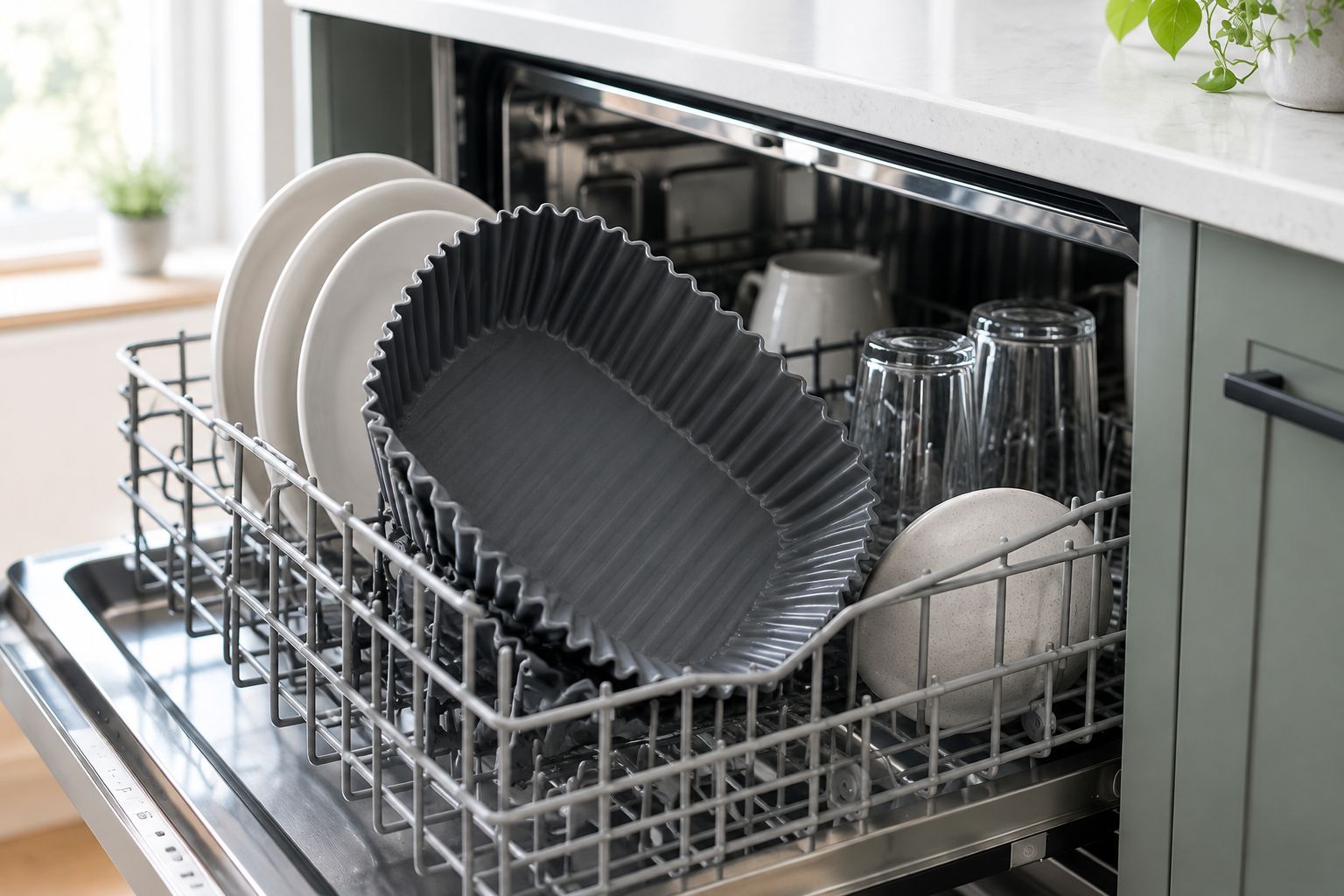
- Keep the basket open. Do not nest liners or sandwich a liner between plates. The water spray needs access to the inside, including the base and corners.
- Angle the opening downward. Give water a route out rather than leaving the liner upright like a serving bowl. Keep the food-contact surface exposed to the spray.
- Support the flexible sides. Use the rack’s existing supports without forcing the silicone onto sharp points or stretching it tightly. Keep the liner away from exposed heating components as directed by the machine manual.
- Check the spray arm. Before closing the door, confirm that the liner and neighbouring dishes do not obstruct its movement.
Expected result: the liner stays open, drains freely and does not block the dishwasher’s moving parts. Nearby dishes do not cover its interior.
The important distinction is between support and compression. Supporting the rim holds a liner in position; squeezing it between dishes closes the surfaces you need to wash.
Wash programme and detergent
- Choose a permitted programme. Match the liner’s care instructions with your dishwasher manual. Do not select the hottest programme just because the liner is used for cooking.
- Add detergent as instructed. Follow the detergent packaging and machine guidance for your load and local water conditions. Extra detergent is not a substitute for removing trapped food.
- Check optional heat settings. Use heated drying or other high-temperature options only when the liner’s instructions permit them. Dishwasher-safe is not a blanket approval for every additional setting.
- Run the machine with the load arranged correctly. If the basket collapses or moves while you load neighbouring dishes, reposition it before starting.
Expected result: the dishwasher runs a programme permitted for both the liner and the machine, with the liner held open throughout loading.
There is no single programme name or button label for this workflow. Use the labels on your own dishwasher rather than selecting a similarly named setting from another model’s instructions.
Inspection, drying and storage
- Allow safe handling after the cycle. Open the machine according to its instructions and avoid hot water trapped in the liner.
- Check the food-contact surfaces. Look along the bottom, corners and any folds. Remove remaining food with a soft sponge, then wash again as needed.
- Check for detergent residue. If the surface feels slippery or has a visible film, rinse it thoroughly and review detergent dosing and loading before the next wash.
- Drain and dry completely. Place the basket where air can reach the inside and outside. Do not stack or fold it while water remains trapped.
- Inspect before reuse. Check for tears, splits or damaged areas that retain food. Stop using a damaged liner and consult its care guidance.
Expected result: the basket is visibly clean, free of retained wash water and dry before storage. Dishwasher completion alone is not the final check.
A remaining stain and a remaining piece of food are different findings. Remove residue you can see or feel; if you cannot confidently clean the surface, do not return it to food preparation.
Alternate workflow: rotate baskets between meals
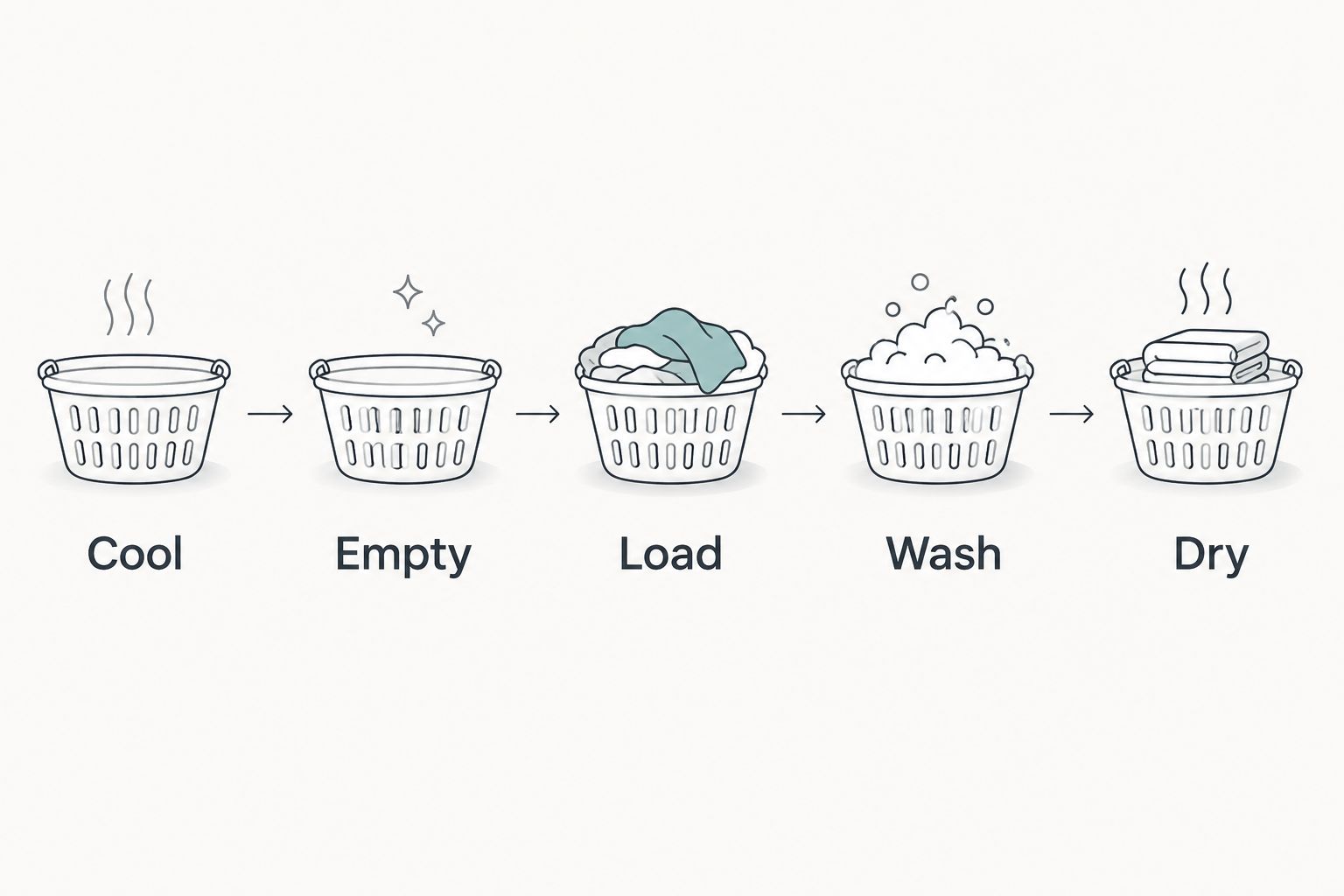
A spare basket changes the routine without changing the cleaning rules. For a 2026 meal-prep setup, keep a clean, dry liner separate from the used liner awaiting the dishwasher.
- Cool and empty the used basket. Prepare it exactly as described above rather than leaving scraps inside until the next load.
- Use a clean, dry basket for the next cooking session. Confirm that the spare fits your air fryer and follow the appliance’s accessory instructions.
- Load used baskets separately. Having several baskets does not make nesting them an acceptable washing method.
- Dry before returning baskets to storage. Keep the clean supply distinct from items still needing washing or inspection.
Best for: households cooking again before the next dishwasher load. The benefit is a spare ready for use; the drawback is that extra baskets require washing space and dry storage.
Crispform’s two-pack supports this rotation, but it does not remove the need to clean the air fryer itself. Follow the appliance manual for the basket, drawer and other removable components.
Troubleshooting
Food remains in corners
Fix: remove the residue with a soft sponge, then check the loading position. A folded wall, nested basket or nearby plate can shield the corner from spray; repeating the same arrangement repeats the problem.
The liner holds dirty water
Fix: empty it carefully and change its angle for the next load. Keep the opening directed downward and check that the flexible base has not sagged into a water-holding pocket.
A greasy or slippery film remains
Fix: wash away the film before reuse, then check whether pooled fat entered the machine or detergent remained after washing. Review the permitted programme, detergent directions and spray access rather than adding detergent automatically.
The liner folds shut during loading
Fix: move it to a supported position and separate it from surrounding dishes. If the machine cannot hold it open without stretching or pinning it unsafely, hand-wash according to its care instructions.
A smell remains after washing
Fix: inspect for trapped food, wash again and dry fully before storage. Avoid improvised chemical mixtures or high-heat treatments; if the smell persists, consult the product’s care guidance before using the liner again.
Customize your workflow
Make the cleaning routine fit your cooking in 2026 rather than adding unnecessary steps. For light residue, empty and inspect the liner before loading; for attached food, add the soft-sponge preparation step.
Choose the washing method around the load you can arrange correctly. Dishwasher cleaning reduces hands-on washing, but only when the liner stays exposed to spray; hand-washing gives direct access to corners but requires your time and attention.
Keep cleaning instructions beside your meal-prep routine. Record the permitted rack position and programme from your actual product and dishwasher manuals, especially when several people share the kitchen. That avoids relying on memory or assuming every silicone accessory has identical care requirements.
FAQ
Can air fryer liners go in the dishwasher?
Yes, if the exact liner is labelled dishwasher-safe. Crispform’s silicone basket two-pack carries that statement; follow its care instructions and your dishwasher manual for placement and settings.
Can I put paper air fryer liners in the dishwasher?
No, disposable paper air fryer liners are not dishwasher items. Dispose of used paper according to its packaging and local waste guidance.
Should silicone air fryer liners go on the top rack?
Use the rack position specified by the liner instructions and your dishwasher manual. There is no universal rack position that applies to every silicone liner and machine.
Do I need to scrub a silicone liner before dishwashing?
Remove loose food and pooled grease first, but a full hand-wash is not automatically necessary. Loosen attached food with warm water and a soft sponge when needed.
Can I wash silicone baskets stacked together?
Do not nest silicone baskets during washing. Separate them so water and detergent can reach each food-contact surface and drain away.
Can the basting brush go in with the silicone baskets?
Check the basting brush’s own care instructions before machine washing it. A dishwasher-safe statement for the baskets does not automatically establish the brush’s suitability.
Are foldable silicone air fryer baskets dishwasher-safe?
Check the exact foldable basket’s care instructions. Silicone material and a folding design alone do not establish dishwasher suitability.
Why is my silicone liner still wet after the dishwasher finishes?
A bowl-shaped liner can retain water, particularly when loaded upright or with a sagging base. Drain it and allow both sides to dry completely before stacking or folding it.
One last thing
Test the loading position before the next meal, while the liner is clean and dry. You can check support, drainage and spray-arm clearance without handling grease or trying to rearrange a full dishwasher.
For your 2026 routine, that small rehearsal matters more than finding a supposedly perfect cycle: the correct programme cannot wash a surface hidden inside a folded basket.