

Small-kitchen air fryer liners are removable inserts used inside an air fryer basket to contain food residue and simplify cleanup where washing and storage space are limited. This 2026 guide explains how to choose air fryer liners for small kitchens without creating another awkward item to wash, dry, or store.
- Choose air fryer liners for small kitchens around basket fit, washing space, and storage—not pack size alone.
- Crispform reusable silicone baskets suit home cooks who want to contain burnt-on food residue.
- Foldable baskets address storage; the dishwasher-safe silicone set addresses a different cleanup need.
- A liner contains mess, but it does not replace appliance cleaning or correct cooking technique.
Why air fryer liners matter for small kitchens
A small kitchen makes cleanup a space problem as well as a washing problem. A greasy basket occupies the sink; a wet liner needs somewhere to dry. The useful accessory is the one that improves that whole routine, not just the moment you remove dinner.
Choose for the path from cooking to cupboard. A liner that fits the appliance but has no drying or storage place leaves part of the problem unsolved. In a studio flat, keeping food preparation space clear also matters when the same surface serves several purposes.
For a broader material comparison, start with the best air fryer liners. Here, the priority is narrower: matching an insert to your basket, sink, and available storage in 2026.
A liner also changes what sits between the food and the basket. Treat easier washing and cooking performance as separate checks. Containing residue is useful, but a crowded insert is not a shortcut to crisp food.
How to choose and use a liner in a compact kitchen
1. Check your appliance before adding an insert
Start with the free check: read the air fryer instructions and inspect the basket you actually use. Appliance capacity alone does not describe the usable base, rounded corners, or space beneath the heating element. Match the liner to the cooking area rather than the outside dimensions of the drawer.
For your 2026 buying checklist, record the basket shape, usable base dimensions, and any restrictions on accessories. Check the liner's own instructions for intended use and temperature limits. A product being made from silicone does not establish compatibility with every air fryer.
Fit comes before material or pack size. Do not compress a liner into an unsuitable basket or assume flexible sides solve a poor fit.
- Measure the usable basket base, including narrow corners.
- Check whether the drawer contains separate cooking compartments.
- Compare the liner's dimensions with the available cooking area.
- Read both sets of instructions for accessory restrictions.
- Confirm that handles and sides stay clear of the heating element.
2. Map the washing and drying route
Before buying anything, follow your current basket from the appliance to the sink and back to storage. Identify the actual frustration: stuck-on residue, awkward washing, a crowded draining area, or nowhere to keep the clean accessory. Each problem calls for a different choice.
A reusable liner adds a washable item even when it contains the mess. A dishwasher-safe option helps only if you use a dishwasher and can accommodate it; hand washing still requires space to reach the folds and corners.
Set aside a drying position before choosing a shape. A liner that fits your cupboard but monopolizes your draining area is not a complete small-kitchen solution.
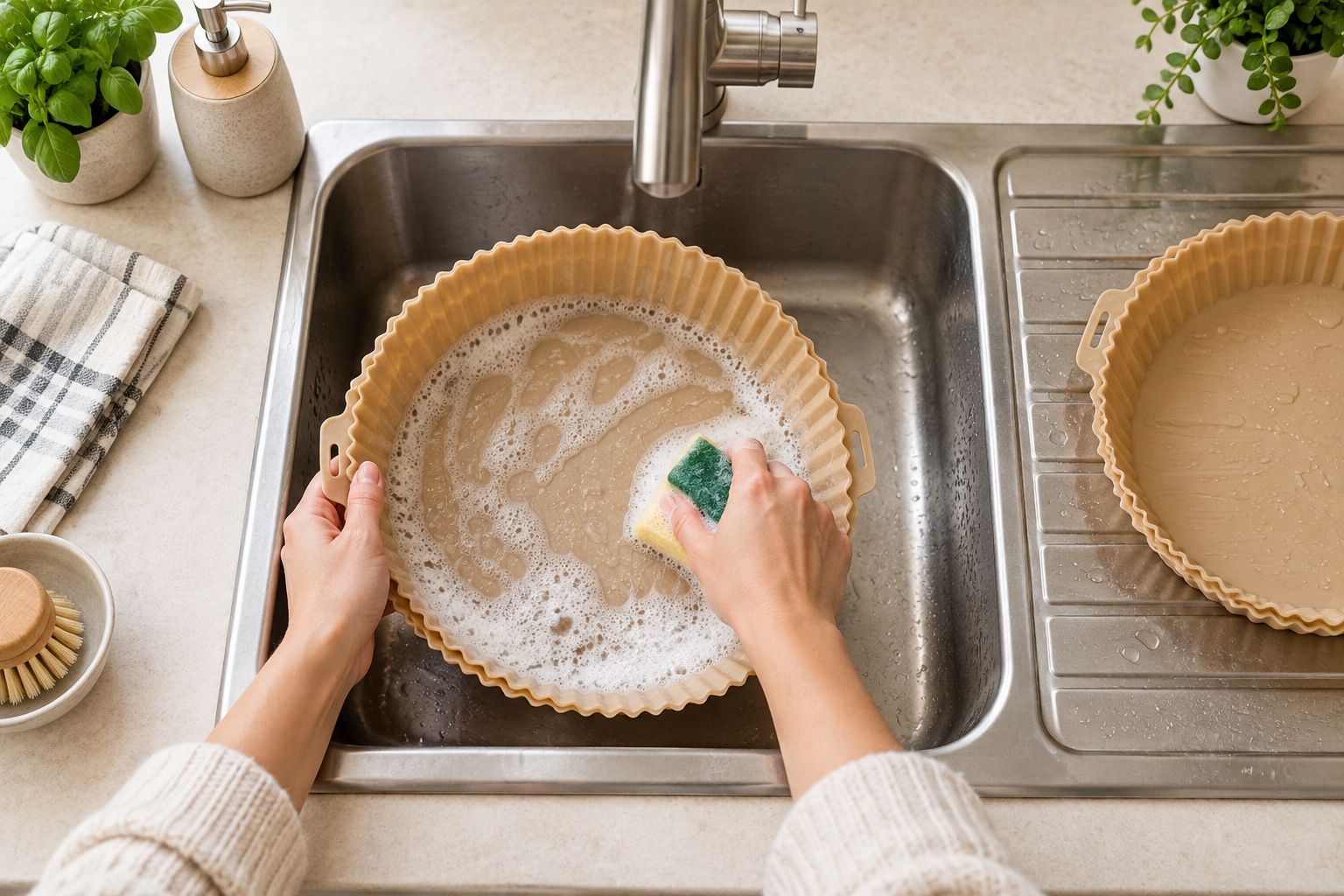
Use your existing sink and storage layout as the test, rather than buying extra organizers to accommodate an accessory.
- Check whether the liner fits comfortably inside your sink.
- Look for corners and folds you can reach when washing.
- Reserve a place where the liner can dry fully.
- Decide whether your routine is hand washing or dishwasher cleaning.
- Choose a permanent storage position before ordering.
3. Choose reusable silicone for the problem it solves
The manual starting point is simple: use the original basket and clean it according to the appliance instructions. If that routine already works, an insert is optional. Reusable silicone becomes relevant when containing food residue would make your cleanup easier.
Crispform air fryer liners are best for home cooks who want reusable baskets to contain food residue. The range includes a set containing 2 baskets and 1 basting brush, plus a separate foldable set containing 3 baskets. These are different storage and washing choices, not interchangeable reasons to buy more accessories.
The trade-off remains washing the liner itself. Silicone also changes the surface beneath the food, so judge the result with the meals you actually cook rather than expecting identical results to an uncovered basket.
- Choose residue containment as the primary reason to add a liner.
- Keep using the bare basket when that method suits the recipe.
- Check cleaning instructions for the specific set, not silicone generally.
- Count how many baskets you can wash, dry, and store.
- Treat included accessories as useful only when your cooking needs them.
4. Protect cooking space and follow safe loading instructions
A liner is an insert, not extra cooking capacity. Keep the food arrangement appropriate for the recipe and appliance, and do not treat tall sides as permission to pack the basket more tightly. Air fryers cook with circulating hot air; the food still needs suitable exposure to that airflow.
For crispness, begin with your usual cooking method and assess what changes when you add the liner. If the food sits in collected liquid, decide whether the liner suits that dish. Containing juices and exposing the underside of food are different priorities.
Follow the appliance and liner instructions for preheating. Loose baking paper can lift toward a heating element, so never assume an empty paper liner is safe during preheating.
- Keep the liner below the heating element and away from moving parts.
- Leave room around food as directed by the recipe and appliance.
- Follow instructions on turning or rearranging food during cooking.
- Keep loose paper from lifting toward the heating element.
- Use suitable protection when handling hot baskets or inserts.
5. Clean the liner without forgetting the appliance
Let the equipment cool as instructed before cleaning. Remove food residue from the liner and inspect the original basket underneath. An insert can contain spills, but it does not seal the entire appliance against grease or crumbs.
For the supplied silicone basket set, dishwasher-safe cleaning is explicitly stated. Do not transfer that claim automatically to the separate foldable set: check that product's care instructions. Non-stick also does not mean that every residue rinses away without washing.
Pay attention to folds, handles, and corners, then dry the liner before putting it away. The aim is a repeatable routine that leaves neither a dirty appliance nor a damp accessory hidden in a cupboard.
- Remove remaining food before washing the liner.
- Follow the specific product's cleaning instructions.
- Inspect the basket and drawer beneath the insert.
- Clean folds and corners where residue collects.
- Dry the liner fully before storage.
6. Store only what earns its space
Use your existing cupboard or drawer first. A foldable basket addresses stored height, but you still need to check its footprint and folded dimensions against the space available. Foldability alone does not prove that an accessory fits beside your cookware.
A multipack also needs a purpose. The 2-basket set gives you another basket to manage; the 3-basket foldable set adds more pieces. Choose the set around your cooking and washing routine, not around the assumption that more units always mean better value.
For a 2026 kitchen reset, use this sequence: Check fit, Plan washing, Choose material, Store dry. It keeps the purchase tied to a real workflow.
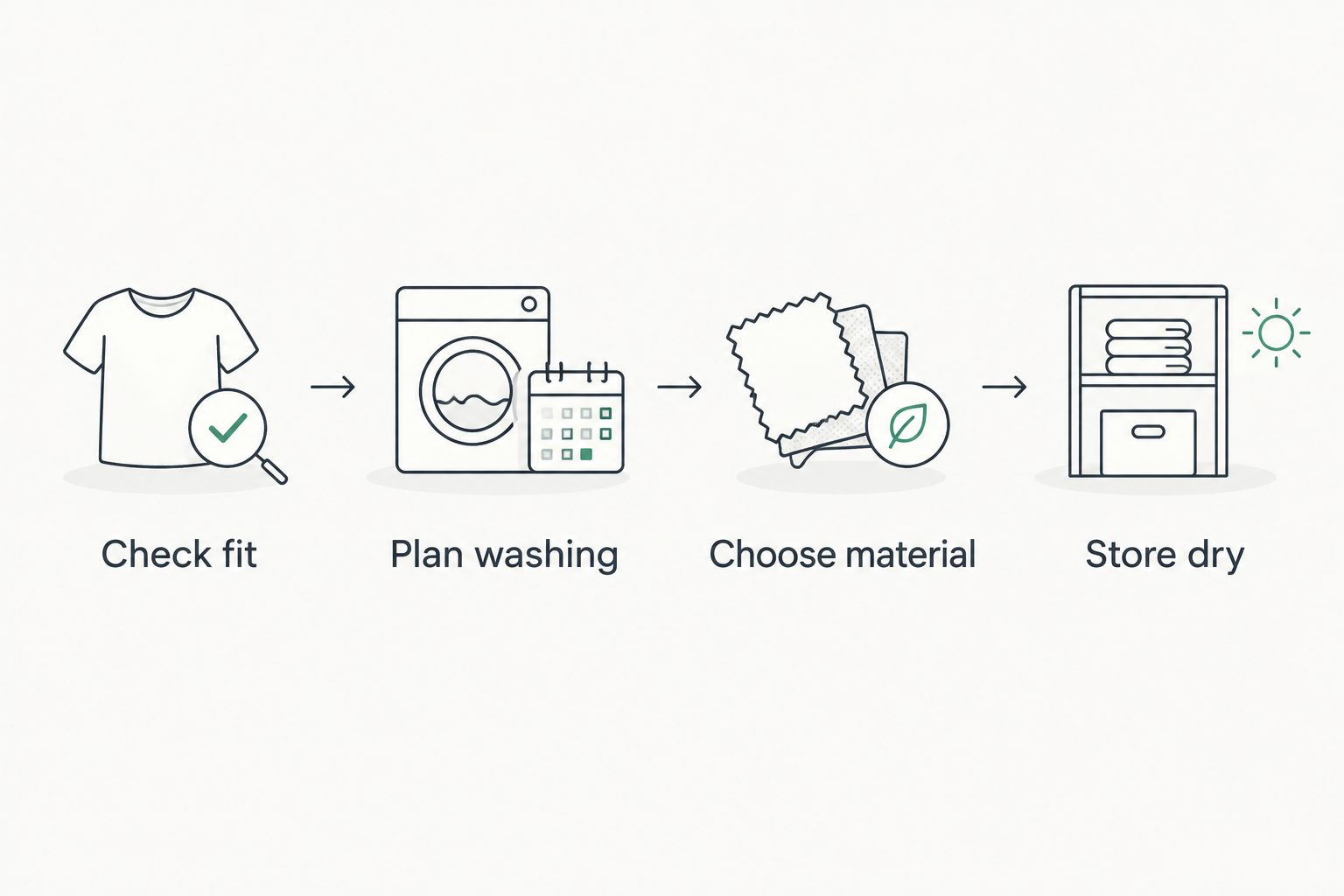
Keep the storage decision practical: a clean liner should have a home without displacing something you use more often.
- Check both folded height and overall footprint.
- Store clean liners away from dirty cookware.
- Keep only the accessories your cooking routine uses.
- Avoid crushing baskets beneath heavy items.
- Return each liner to its designated place after drying.
Compare options for a small kitchen
The best option solves your biggest constraint without creating a larger one. An uncovered basket avoids another accessory; reusable silicone contains residue; foldable silicone makes stored height part of the decision. Paper avoids washing a separate insert but creates replacement waste.
| Option | Best for | Main advantage | Key limitation |
|---|---|---|---|
| Original air fryer basket | Cooks whose existing cleanup routine works | No extra liner to wash or store | Food residue remains on the basket itself |
| Air-fryer-compatible baking paper | Cooks who prefer a disposable insert | No separate reusable liner to wash | Creates waste and requires careful loading under appliance instructions |
| Silikonkorgar till airfryer — 2-pack + pensel | Home cooks wanting dishwasher-safe reusable baskets | Includes 2 non-stick silicone baskets and 1 basting brush | Both baskets and the brush need storage; fit still needs checking |
| Hopfällbara korgar 3-pack | Home cooks prioritizing foldable storage | Foldable format in a set of 3 baskets | The set still needs cupboard space; check dimensions and care instructions |
The first Crispform set has explicit non-stick and dishwasher-safe information. The foldable set's supplied information establishes its folding format, not the same cleaning claims. Choose between those stated features rather than assuming every silicone basket performs identically.


Common mistakes in small kitchens and studio flats
Buying for cupboard space but ignoring the sink
A collapsible accessory still needs washing and drying. Check that you can open it for cleaning without taking over the only usable preparation area.
Treating a multipack as a storage solution
Additional baskets do not organize themselves. Give every piece a purpose and a place, especially when a pack includes an accessory you already own.
Assuming the liner keeps everything clean
Residue can remain outside the insert. Inspect the original basket and drawer after cooking, and keep following the appliance's cleaning instructions.
Choosing easier cleanup at the expense of the meal
A liner that collects liquid is not automatically the right surface for every food. Use the original basket when the recipe and appliance instructions call for that cooking arrangement.
FAQ
What's the best type of air fryer liner for a small kitchen?
The best type fits your basket and has a clear washing, drying, and storage place. Reusable silicone suits residue containment, while a foldable format makes stored height part of the choice.
Are foldable silicone baskets better for a studio flat?
Foldable silicone baskets are better when reducing stored height is your main requirement. Check their footprint and folded dimensions too; a folding design does not establish that the basket fits your drawer or appliance.
Can I put a silicone air fryer liner in the dishwasher?
Use a dishwasher only when the specific product's instructions permit it. Crispform lists the baskets in its silicone basket and brush set as dishwasher-safe; check the separate foldable set's care instructions independently.
Do air fryer liners stop the basket getting dirty?
Air fryer liners contain residue but do not eliminate appliance cleaning. Inspect the original basket and drawer after cooking and clean them according to the manufacturer's instructions.
Do I need a liner to use an air fryer?
A liner is optional, not a prerequisite for air frying. Use the original basket according to the appliance instructions if its cooking and cleaning routine already works for you.
Can I preheat my air fryer with a paper liner inside?
Do not preheat with a loose paper liner that can lift toward the heating element. Follow the appliance and paper liner instructions, including requirements for holding the paper down with food.
Will a silicone liner make my food crispier?
A silicone liner does not guarantee crispier food. Food arrangement, circulating hot air, and collected liquid still affect the result, so choose the cooking surface that suits the recipe and appliance.
One last thing
Choose the drying place before the liner. That decision exposes awkward shapes and unnecessary extras before they enter your kitchen. For your 2026 setup, the strongest recommendation is not the largest pack: it is the liner you can clean, dry, and put away without reorganizing the room after dinner.