

Air fryer liners for RV cooking are removable inserts that catch food residue with the aim of making campsite cleanup easier. This 2026 guide explains how to choose, use and pack them when your cooking space, washing area and storage all share the same small footprint.
- Crispform air fryer liners suit RV cooks who want reusable silicone baskets rather than disposable inserts.
- Choose air fryer liners for RV cooking by basket fit and appliance instructions, not the advertised appliance capacity.
- Reusable silicone needs washing and drying; parchment creates waste, while a bare basket leaves the original cooking surface exposed.
- Keep air circulation and safe liner placement ahead of easy cleanup when planning camping meals.
Why air fryer liners matter for RV cooking
In an RV, cleaning the air fryer also means finding somewhere to wash, rinse and dry its parts. A removable liner gives you a separate surface to clean, but it does not eliminate washing or make the appliance basket maintenance-free.
Crispform air fryer liners are best for RV cooks who want reusable silicone baskets to catch food residue. Crispform sells reusable silicone baskets and accessories; the choice is about your cleanup routine, not a special cooking mode for camping.
The practical question for your 2026 camping setup is whether you would rather wash an insert, dispose of a paper liner, or clean the original basket directly. Each approach leaves you with a different job after dinner.
Before choosing, identify the task you actually dislike:
- Scrubbing stuck-on residue from the original basket.
- Handling food drips while moving cooked food to a plate.
- Finding drying space for bulky appliance parts.
- Carrying and storing disposable cooking supplies.
A liner addresses the food-contact surface. It does not change the air fryer's electrical requirements, make an unsuitable campsite outlet suitable, or replace the appliance manufacturer's safety instructions.
How to choose and use liners in an RV
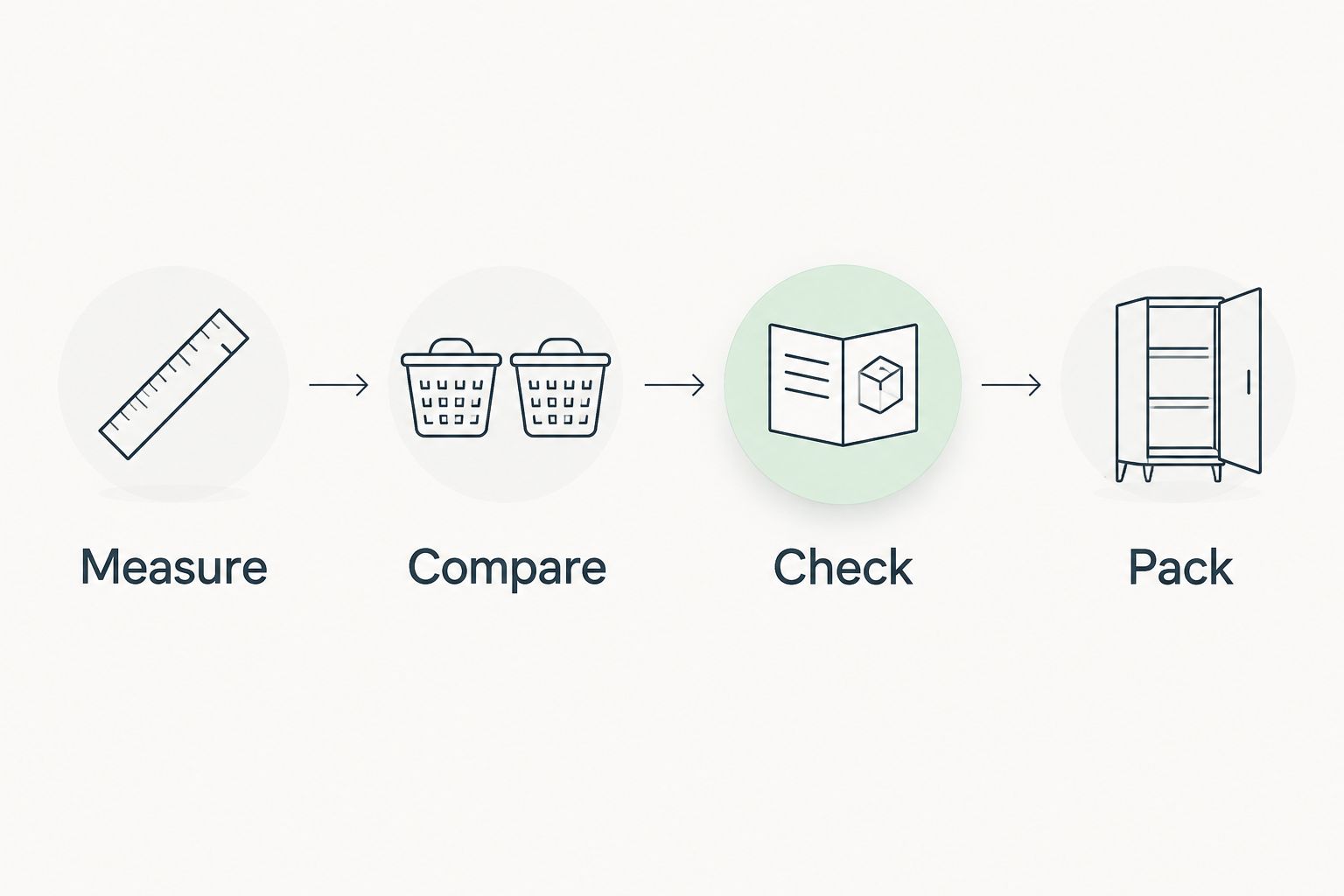
1. Measure your basket before choosing a liner
Start with the air fryer you already own. Remove the basket when the appliance is cool and measure the usable interior, including any rounded corners or narrowed base. A liner must sit as intended without being forced against the walls or interfering with the drawer.
Do not choose by the appliance's advertised capacity alone. Capacity does not describe the shape of the cooking surface, and a liner that looks right in a photograph still needs a fit check against your particular basket.
For your 2026 packing list, record the dimensions beside the appliance model. Keep that note accessible when comparing accessories rather than relying on memory in a shop or at the campsite.
- Measure the usable base width and depth.
- Check the available height with the drawer closed.
- Account for curved corners and tapered sides.
- Compare those measurements with the liner's stated dimensions.
- Check the appliance manual's accessory guidance before buying.
2. Choose the cleanup routine you can actually maintain
Try cleaning the original basket according to its instructions before adding equipment. That gives you a baseline: you know where residue collects, what takes effort and whether another washable item would solve the problem.
Reusable silicone is a practical option when you have a place to wash and fully dry it. Disposable parchment avoids washing the liner itself, but you still need to handle waste and inspect the basket underneath. Neither option guarantees a clean appliance after every meal.
Choose reusable silicone for repeated use, not because it removes every cleanup task. Crispform's silicone basket options belong in this decision after you have checked fit and decided that washing an insert suits your routine.
- Keep the original basket if its cleanup already works for you.
- Choose reusable silicone when you can wash and dry it after use.
- Consider suitable parchment when you prefer a disposable insert.
- Plan where dirty cooking equipment will sit before washing.
- Leave space for clean equipment to dry before packing.
3. Match the liner to the food, not just the basket
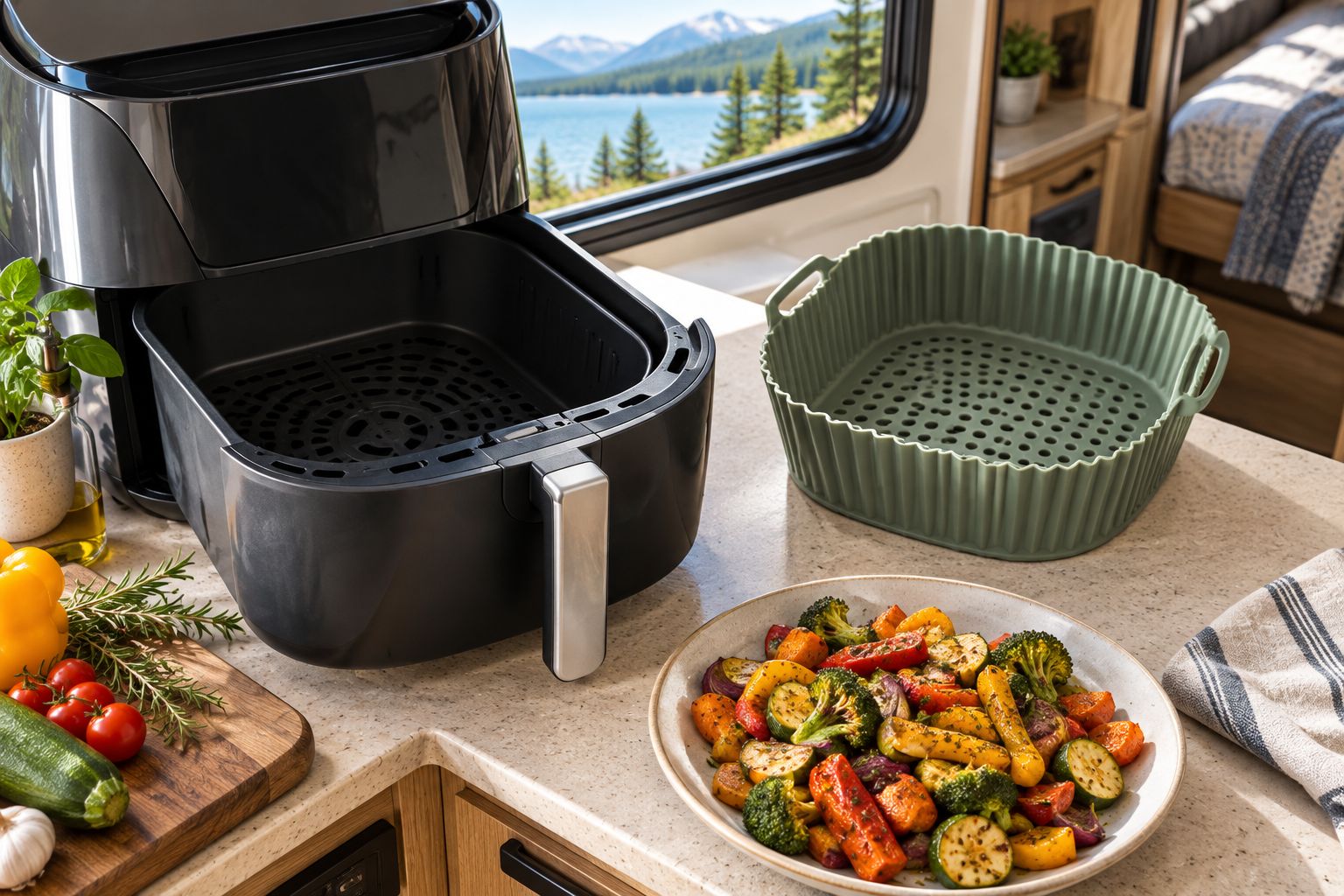
Use the original basket as your reference for foods where exposed airflow and surface browning matter. A solid insert changes how food sits above the basket base and where liquid collects. Judge the result on the food you actually cook rather than expecting every recipe to behave identically.
For a repeatable comparison, cook a familiar meal without a liner first. On another occasion, use a suitable liner while following the appliance and liner instructions. Compare the underside, collected liquid and cleanup before deciding which method belongs in your camping routine.
Crispform offers a 2-pack with a basting brush and a separate foldable 3-pack. Those are different packing choices, not evidence that either format cooks every food better.
- Use familiar food when comparing lined and unlined cooking.
- Leave room around food rather than crowding the basket.
- Check the underside before serving.
- Watch for liquid collecting around the food.
- Use a bare basket when it gives the result you prefer.
4. Follow the appliance instructions before heating
Read the air fryer manual alongside the liner instructions. Check that the material, placement and intended use are permitted, and follow the applicable temperature restrictions. If the instructions conflict, do not use that combination.
Do not place loose parchment in an air fryer during empty preheating. Moving air can lift lightweight paper toward the heating element. Keep liners away from the element and follow the manufacturer's directions for securing or loading any insert.
Your 2026 campsite routine should also include the appliance's electrical setup. A liner has no bearing on the required power supply, ventilation or stable placement of the air fryer.
- Confirm that the appliance permits the chosen accessory.
- Follow the stated temperature and placement restrictions.
- Keep loose paper out of empty preheating cycles.
- Keep handles and liner edges clear of the heating element.
- Follow the appliance's electrical and ventilation instructions.
5. Clean the insert and inspect the basket underneath
Let the cooking equipment cool as directed before handling or washing it. Remove the liner carefully, then inspect the original basket for escaped grease, crumbs and moisture. Catching food residue inside an insert does not prove that everything underneath stayed clean.
Wash reusable inserts according to their own care instructions. Crispform's 2-pack is described as dishwasher-safe, but an RV without a dishwasher still needs a workable washing routine. Dishwasher compatibility does not remove the need to clean corners, folds and any remaining residue.
Dry the liner before storing it in a cupboard or travel container. If an insert has visible damage, stop using it and follow the manufacturer's replacement guidance rather than treating damage as a cosmetic issue.
- Let hot components cool before handling them.
- Empty collected residue into an appropriate waste container.
- Check the original basket beneath the liner.
- Follow the insert's cleaning instructions.
- Dry the insert before putting it away.
6. Pack only what earns its storage space
Start with the minimum equipment needed for your normal cooking routine. An extra insert is useful only if you have a reason to rotate it, such as preparing another meal while the first waits for washing. A larger pack is not automatically the better RV choice.
Foldable baskets deserve attention when cupboard space is the deciding factor. Check their dimensions in use and in storage before choosing them; a folding format does not establish compatibility with your air fryer.
Build your 2026 packing list around a complete cycle: store, cook, cool, wash and dry. An accessory that fits the cupboard but has nowhere to dry creates another problem at the end of dinner.
- Allocate a dry storage location before adding accessories.
- Keep the care instructions with your appliance information.
- Pack a spare only when it supports your meal routine.
- Separate dirty inserts from clean cooking equipment.
- Reassess unused accessories after your trip.
Compare liner options for RV cooking
The best option depends on which job you want to simplify. The table below separates the supplied product details from the broader choice between reusable inserts, disposable liners and no liner.
Neither silicone format should be chosen without checking dimensions and permitted use. Pack size describes what you receive; it does not establish how many inserts fit your appliance at once.
| Option | Best for | Main advantage | Key limitation |
|---|---|---|---|
| Silikonkorgar till airfryer — 2-pack + pensel | Cooks who want reusable baskets with a brush | Includes 2 silicone baskets and 1 basting brush; described as non-stick and dishwasher-safe | Inserts still need cleaning and a fit check; dishwasher suitability does not solve campsite washing |
| Hopfällbara korgar 3-pack | Cooks prioritizing a foldable format | Provides foldable baskets in a 3-pack | Folding does not confirm appliance compatibility; check dimensions and care instructions |
| Air-fryer-suitable parchment | Cooks who prefer a disposable insert | The used paper liner does not need washing | Creates waste and needs careful placement; loose paper is unsuitable for empty preheating |
| Original basket without a liner | Cooks who want no extra accessory to pack | Preserves the appliance's original cooking arrangement | Leaves food residue on the basket itself to clean |
For RV cooking, choose the format you can clean and store reliably. A reusable insert that stays dirty in a cupboard is not a better system than an original basket you clean after dinner.


Common mistakes RV cooks make with air fryer liners
Buying for the cupboard rather than the appliance
A compact storage format solves only the packing question. Measure the cooking basket first, then assess storage. Do not force a liner into a drawer because it folds neatly when empty.
Treating a liner as a substitute for cleaning
A liner catches residue on its own surface; grease or crumbs can still reach the basket. Inspect both after cooking. Otherwise, the next meal starts with residue you never checked.
Expecting identical browning with every insert
A solid silicone basket and the appliance's original cooking surface are different arrangements. Compare familiar meals and keep the bare basket available when it gives a better result. Easy cleanup is not a reason to accept food you enjoy less.
Packing spares without a drying plan
More inserts give you more items to manage. Decide where the washed liner will dry and where a dirty spare will wait. Keep that decision separate from how many baskets come in the pack.
Assuming an accessory changes campsite power requirements
It does not. Check the air fryer's electrical instructions and the site's permitted setup independently of your liner choice. An accessory cannot correct an unsuitable power supply or a poorly positioned appliance.
FAQ
What's the best type of air fryer liner for RV cooking?
Reusable silicone is best for RV cooks who want a washable insert and have space to clean and dry it. Suitable parchment suits a disposable routine, while the original basket avoids packing an extra accessory.
Are silicone liners better than parchment for camping?
Silicone liners are better when repeated use is your priority, but they still need washing and drying. Parchment avoids washing the insert itself but creates waste and needs careful placement away from the heating element.
Can I preheat my air fryer with a liner inside?
Do not put loose parchment in an empty air fryer during preheating. For silicone or other inserts, follow both the appliance and accessory instructions rather than assuming all liners have the same rules.
Will an air fryer liner stop me from cleaning the basket?
No, an air fryer liner does not remove the need to inspect and clean the original basket. Check underneath for grease, crumbs and moisture after each use, then clean according to the appliance instructions.
How do I know whether a liner fits my RV air fryer?
Measure the usable basket interior and compare it with the liner's stated dimensions. Check height, corners, drawer clearance and the appliance manufacturer's accessory guidance; advertised appliance capacity alone is not a fit check.
Which Crispform basket should I consider for camping?
Consider the 2-pack with a basting brush if you want that combination, or the foldable 3-pack if a folding format matters to your storage plan. Confirm dimensions and permitted use before choosing either option.
Do silicone liners make air fryer food crispier?
A silicone liner does not guarantee crispier food. Compare lined and unlined results with a familiar meal, check the underside and use the original basket when it gives you the browning you prefer.
One last thing
Before your first 2026 trip, rehearse the entire cleanup at home using only the washing and drying space you expect in the RV. Cook a normal meal, remove the liner, inspect the basket, wash the parts and put them away.
That rehearsal tests something a product photograph cannot: whether the accessory fits your evening, not just your air fryer. Keep the liner if it makes the full routine easier; leave it behind if it merely moves the mess.